Allstar.GG ∙ 2025
Instant Replay
"/><stop offset="1" stop-color="rgba(26, 31, 46, 0.3)"/></linearGradient></defs><path d="M 0 492 L 0 192 L 20 162 L 40 204 L 70 102 L 90 180 L 120 72 L 140 162 L 170 42 L 190 144 L 220 12 L 240 132 L 270 0 L 290 120 L 320 24 L 340 144 L 370 42 L 390 168 L 420 60 L 440 168 L 470 72 L 490 180 L 520 84 L 540 192 L 570 102 L 590 204 L 620 120 L 640 216 L 670 132 L 690 222 L 720 144 L 740 228 L 770 162 L 790 240 L 820 180 L 840 252 L 870 192 L 890 264 L 920 204 L 940 252 L 970 222 L 1000 192 L 1000 192 L 1000 492 Z" fill="url(%23UmBQGVl15-2834627509-linear-gradient)" height="492px" id="UmBQGVl15" width="1000px"/></svg>)
"/><stop offset="1" stop-color="rgba(20, 30, 40, 0.5)"/></linearGradient></defs><path d="M 0 337 L 0 157 L 30 135 L 60 180 L 100 90 L 130 148 L 160 67 L 200 135 L 230 45 L 260 121 L 300 22 L 330 112 L 360 0 L 400 103 L 430 13 L 460 112 L 500 31 L 530 121 L 560 45 L 600 135 L 630 58 L 660 126 L 700 31 L 730 112 L 760 45 L 800 121 L 830 58 L 860 135 L 900 67 L 930 148 L 960 103 L 1000 157 L 1002 157 L 1002 337 Z" fill="url(%23xG2O54qro-1551635875-linear-gradient)" height="337px" id="xG2O54qro" width="1002px"/></svg>)
"/><stop offset="1" stop-color="rgba(30, 40, 50, 0.7)"/></linearGradient></defs><path d="M 0 195 L 0 105 L 50 90 L 80 120 L 120 75 L 150 105 L 180 60 L 220 99 L 250 45 L 280 90 L 320 30 L 350 78 L 380 15 L 420 69 L 450 0 L 480 60 L 520 15 L 550 75 L 580 30 L 620 60 L 650 45 L 680 81 L 720 60 L 750 90 L 780 45 L 820 84 L 850 39 L 880 75 L 920 51 L 950 90 L 980 69 L 1000 105 L 1000 105 L 1000 195 Z" fill="url(%23IcHwKBJi5-3137733011-linear-gradient)" height="195px" id="IcHwKBJi5" width="1000px"/></svg>)
Role
Research, Interaction Design, Visual Design, Prototyping
Team
1 Product Manager
Timeline & Status
4 Weeks, Iceboxed
Overview
Allstar.gg captures gameplay clips by processing game data in the cloud, enabling users to generate high-quality videos with longer rendering times as a tradeoff.
As the sole product designer, I led research, design, and prototyping for a new clip creation flow that sought to mitigate user frustration during long render times.
While the feature generated strong internal enthusiasm, it was ultimately deprioritized due to shifting company objectives.
Highlights
Transforming Post-Game Highlights from a Chore to a Celebration Through Intelligent Push Notifications.
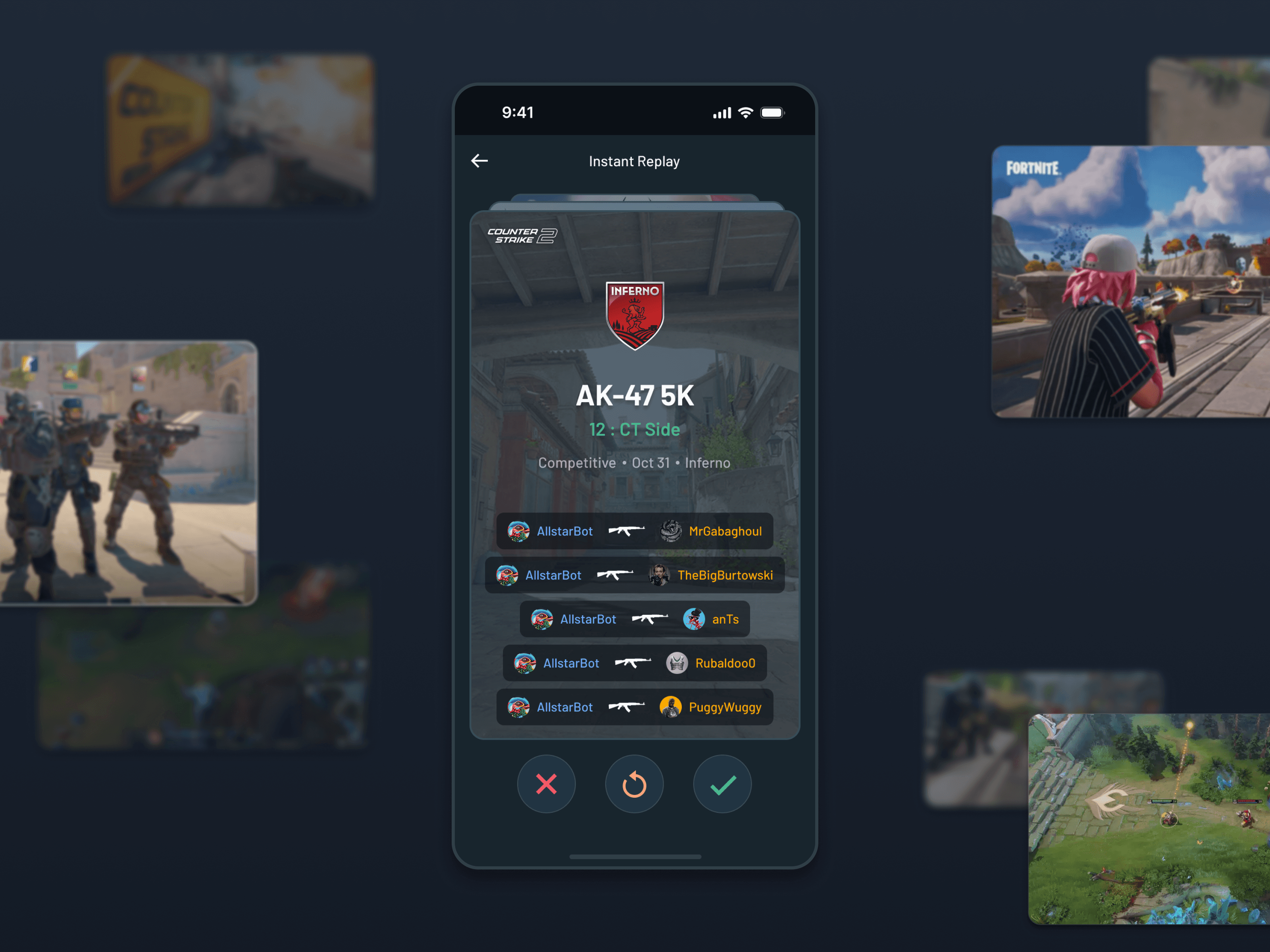
Clip creation via moment swiping
Video
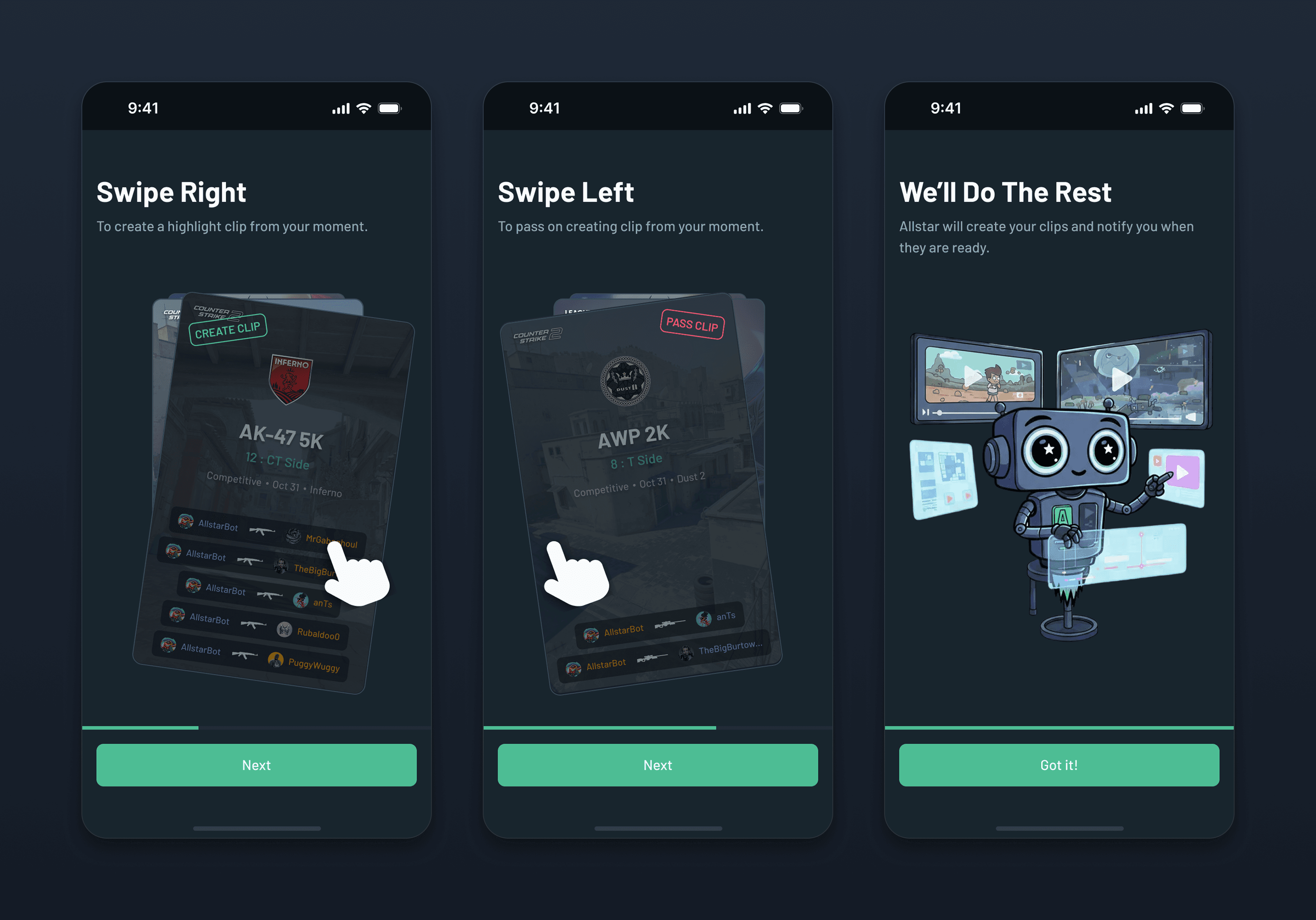
Instant Replay onboarding flow
IMAGE
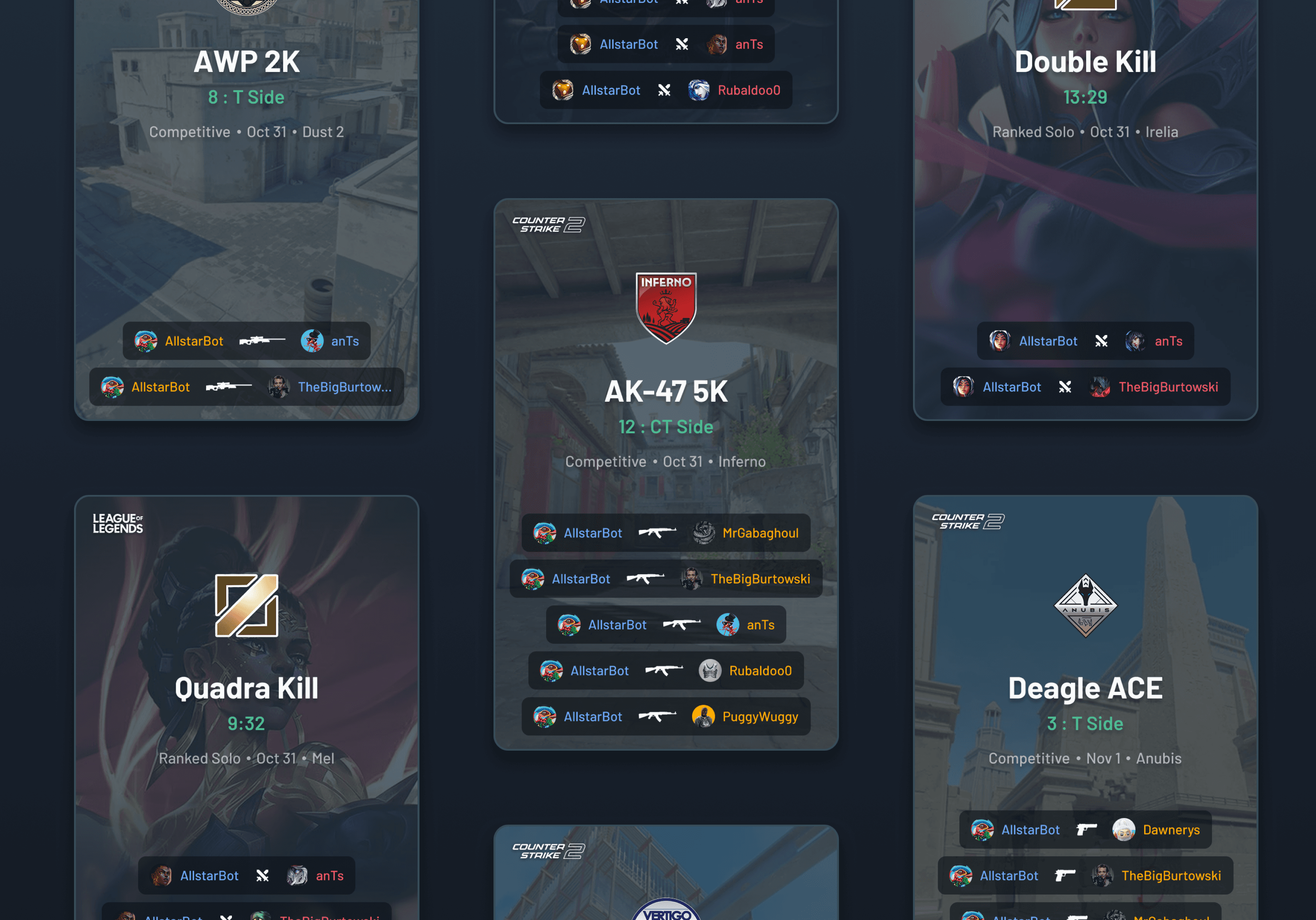
Gameplay moment cards
IMAGE
Challenge
That game-winning triple kill? Already forgotten. Clipping was too hard.
Allstar's clip creation required users to stop playing, manually search match history, and wait 3-10 minutes for renders—often clipping the wrong moment.
The Core Problem:
We built a tool that required users to remember, search, and wait. We were designing for drop-off.
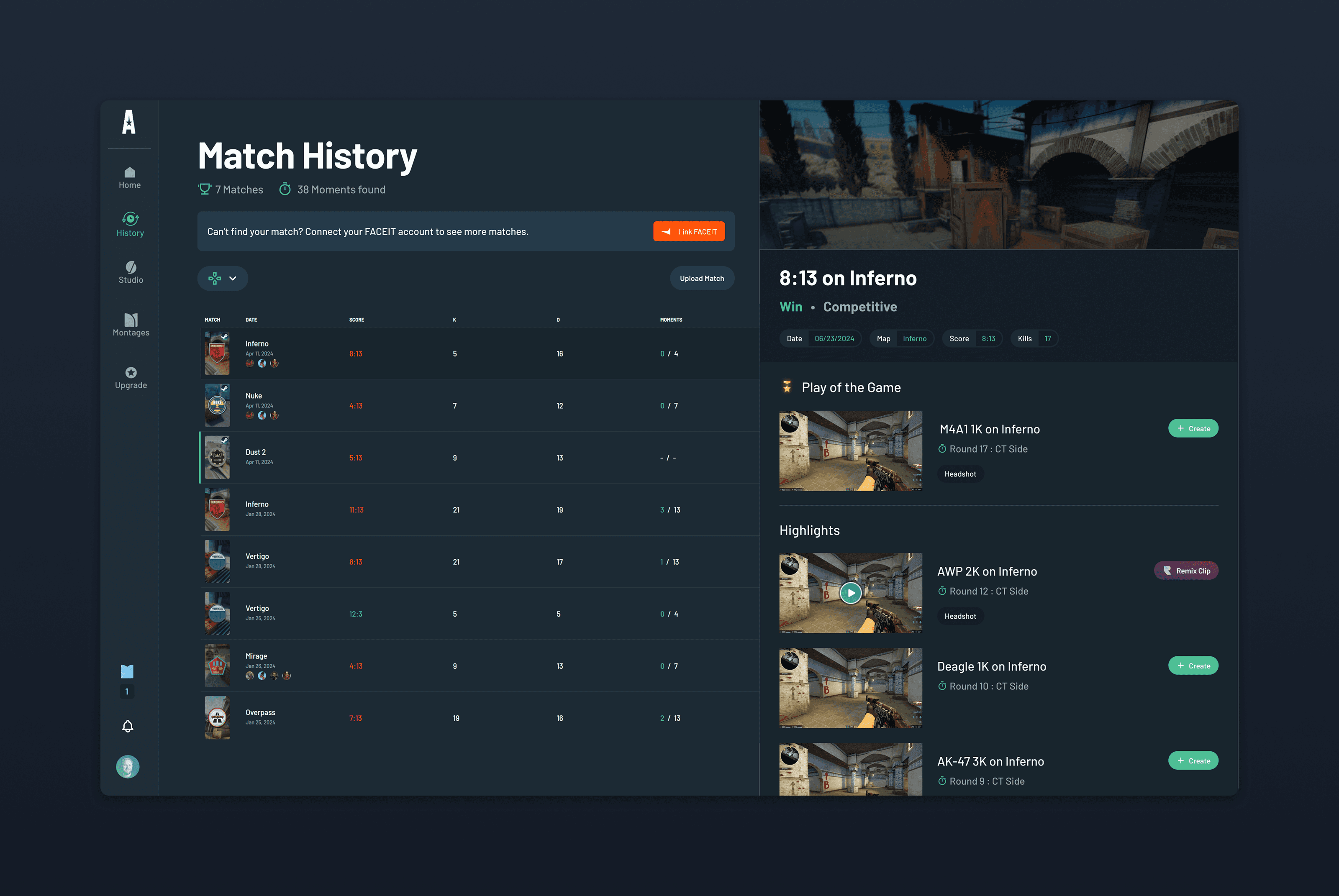
Allstar's Match History page
IMAGE
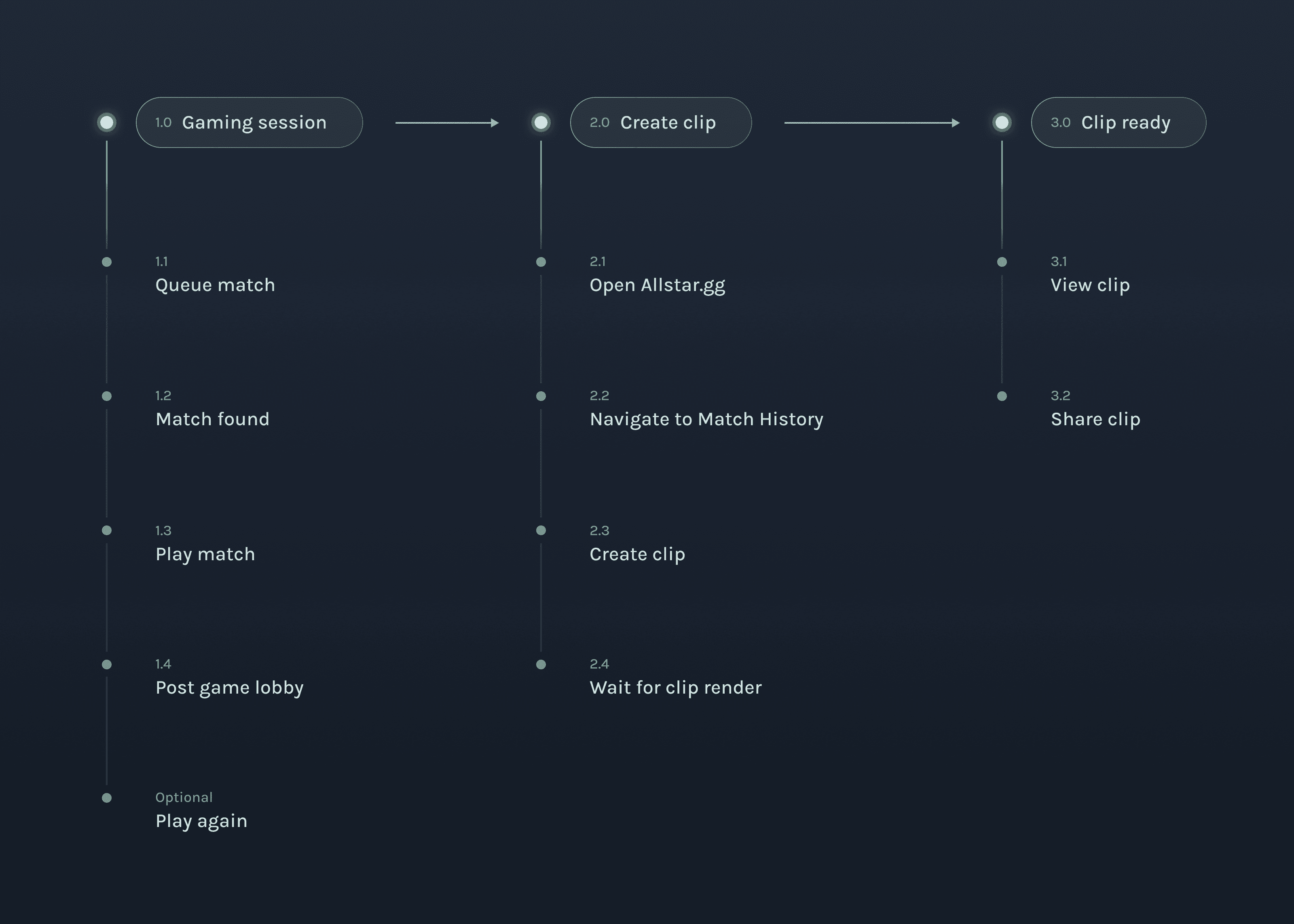
Task flow for creating a clip through Match History
IMAGE
Discovery
Why users weren't creating clips?
I conducted audited the clip creation task flow and analyzed Mixpanel data to identify the core reasons why users weren't creating clips.
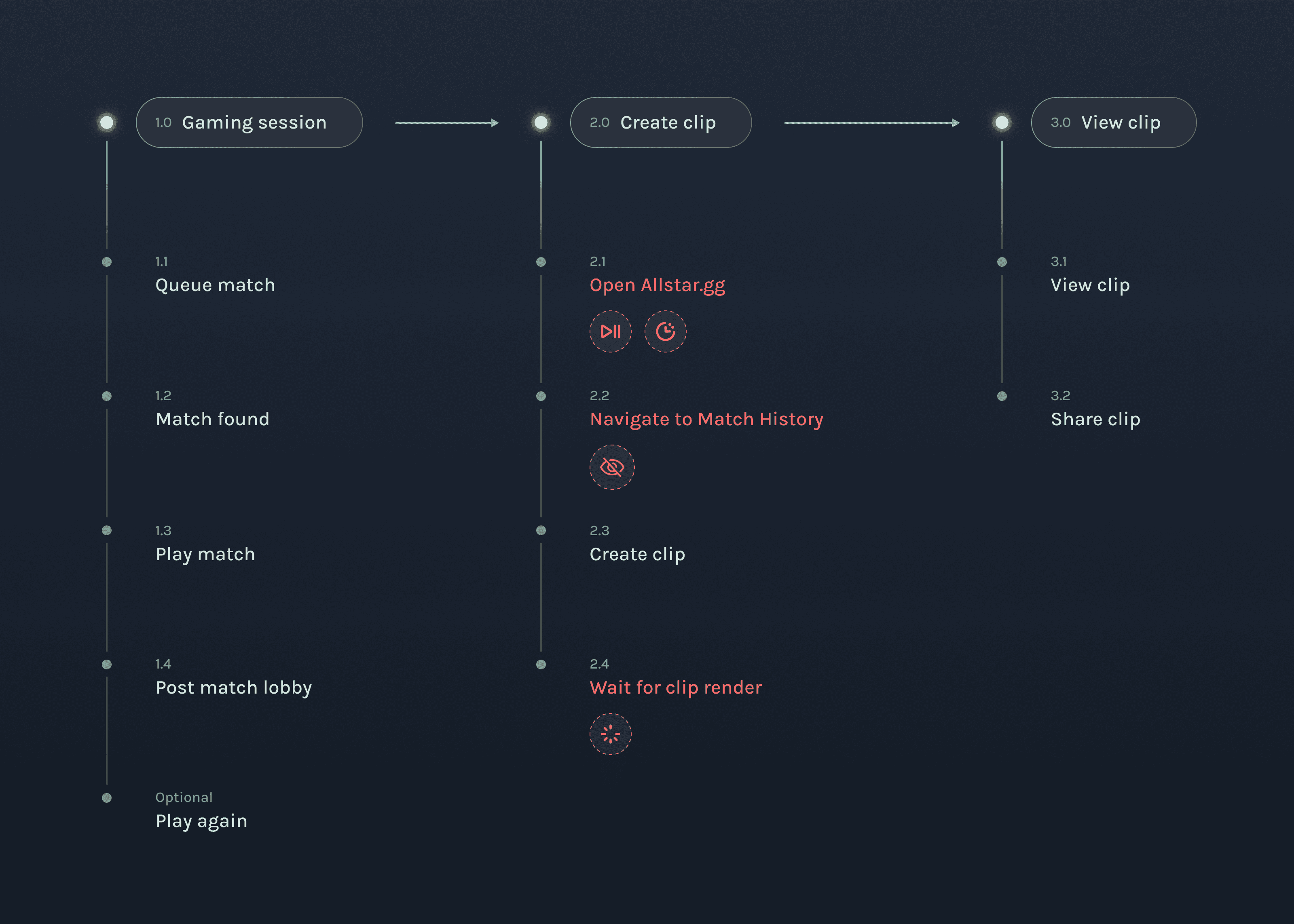
Clip creation is completely disjointed from the gaming session loop
Users must remember to log into Allstar after their session: a passive clipping experience
Users must interrupt their gaming session to create clips
Time between game and clip creation can be long; users forget their clippable moments
Users cannot preview clips before full cloud render is complete
Clips take 3-10 minutes to render, leading to high abandonment rates
KEY INSIGHT
Emotion Fades Fast
Users experience their best moments during gameplay, but we ask them to remember and recreate that excitement hours, days, or even weeks later. The emotional peak has already passed.
Approach
Flipping the script: From user-driven to platform-driven
Instead of asking users to find their highlights, what if Allstar delivered them automatically? I shifted from a user-driven (pull) system to a platform-driven (push) system.
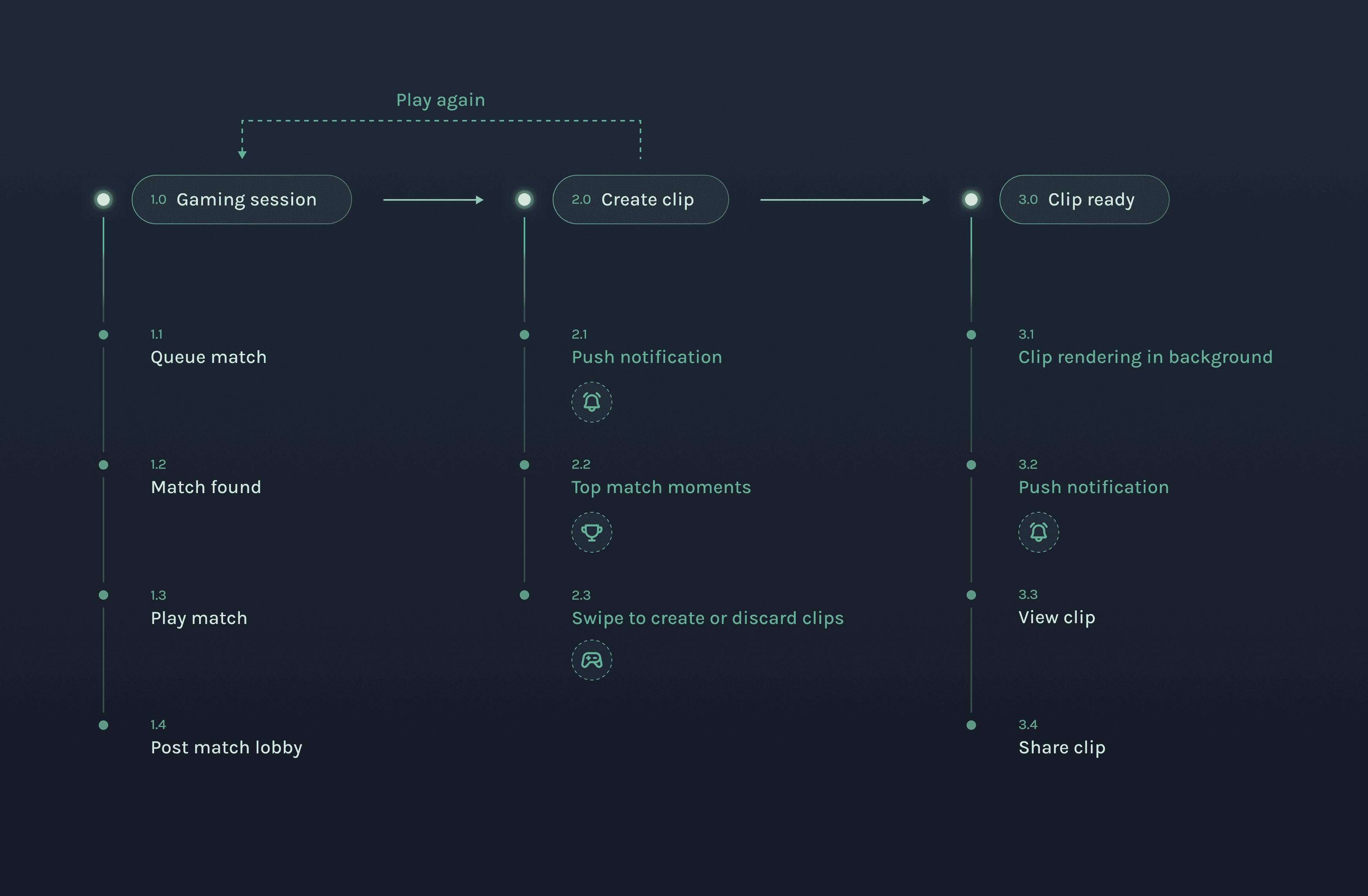
Clip creation now fits seamlessly into the gaming session flow
Clips render in the background while the user is playing their next match
Users are actively served mobile push notifications when an action is required
Top moments from the last match give users a sense of accomplishment
Gamified UI to inject fun into a repetitive task
Ideation
Catching users while their memory is fresh
I explored 4 different solutions to solve the core problem: users forget their best moments by the time they open the app.
Feature
Pros
Cons
Auto-Clip Everything
✅
Zero User Effort
❌
Prohibitive Server Costs
❌
Cluttered Library
AI Highlight Reel
✅
Highly Personalized
✅
Feels Magical
❌
Complex MVP
❌
Requires ML Training
❌
Unpredictable Quality
In-Game Overlay
✅
Captures Peak Emotion
✅
Zero Delay
❌
Requires Game Partnerships
❌
6+ Month Build
❌
Limited Game Support
Push + Swipe
✅
Familiar Pattern
✅
Scalable
✅
Low Server Cost
❌
MINOR: Slight Delay Post Match
Quick Wins
Sweet spot
Deprioritize
Consider
Lower Implementation Effort
User Impact
Push + Swipe
Auto-Clip
In-Game Overlay
AI Highlight Reel
The Solution: Post-Match Notifications + Swipe Queue
Why this approach works:
Timing: Catches users right after the match while memory is fresh
Familiar pattern: Swipe interactions (like Tinder) are fast and intuitive
Low friction: Binary choice (keep/discard) requires minimal thinking
Solution
Transforming effort into anticipation
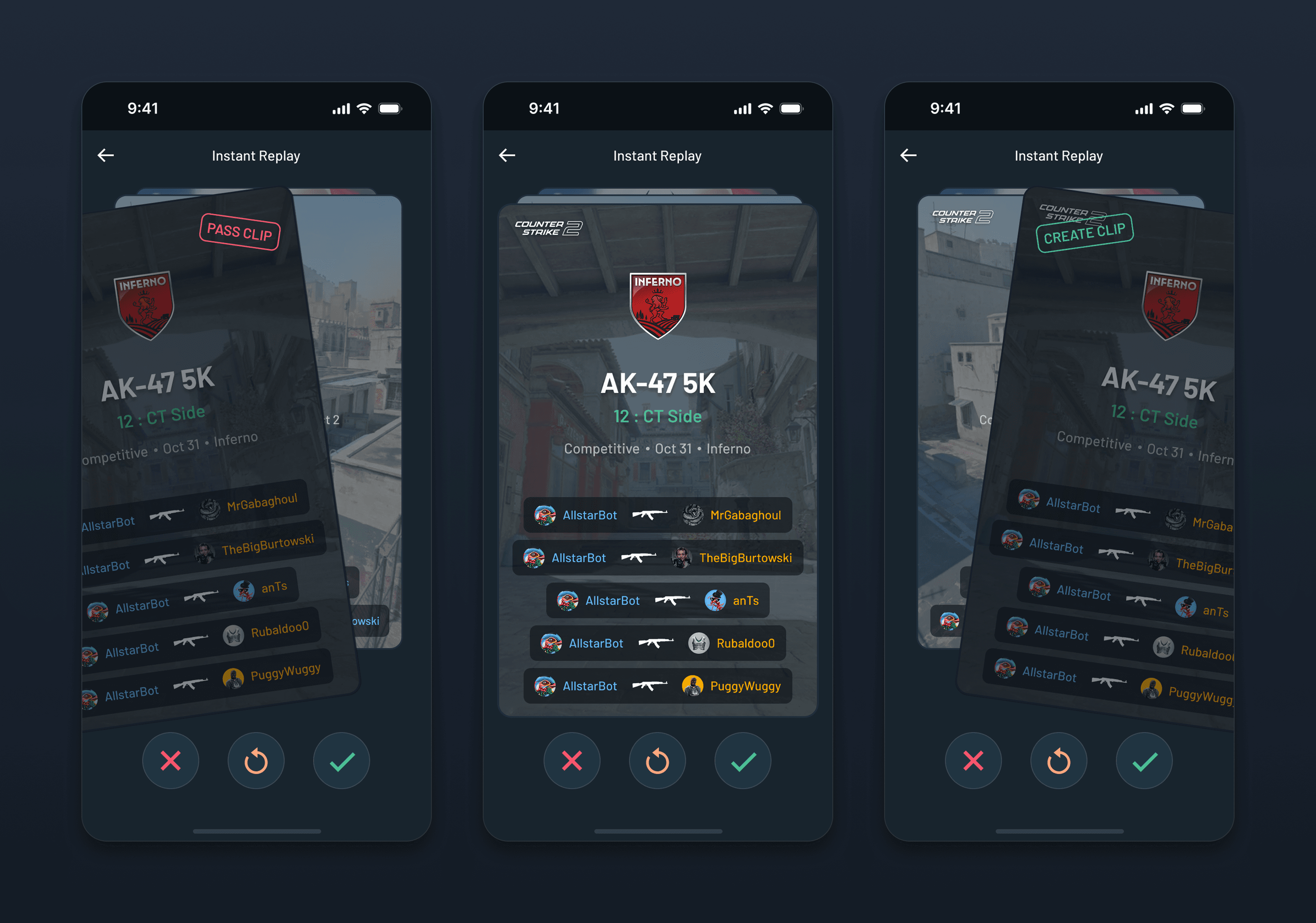
Swiping queue
IMG
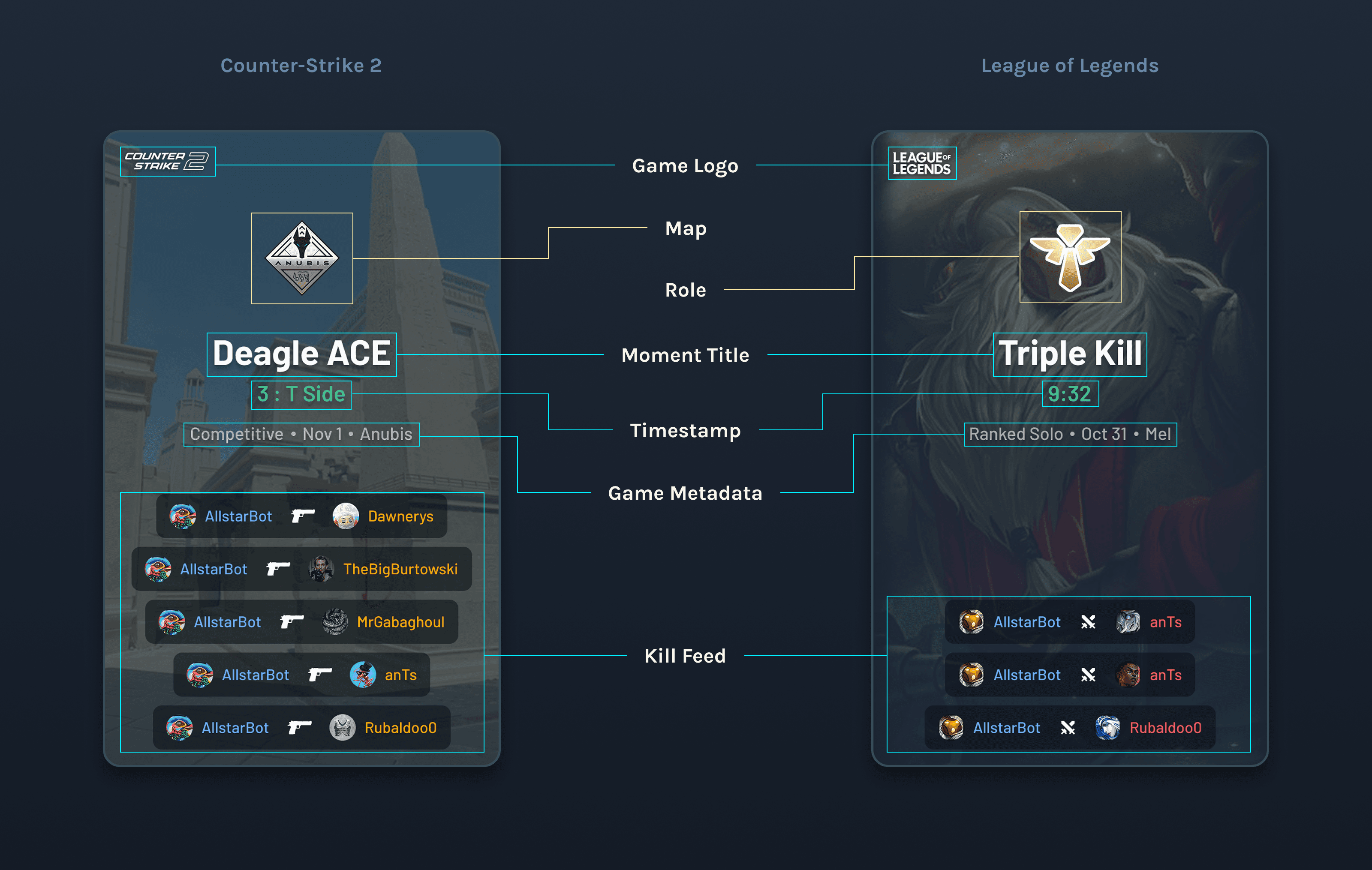
Anatomy of gameplay moment cards
IMG
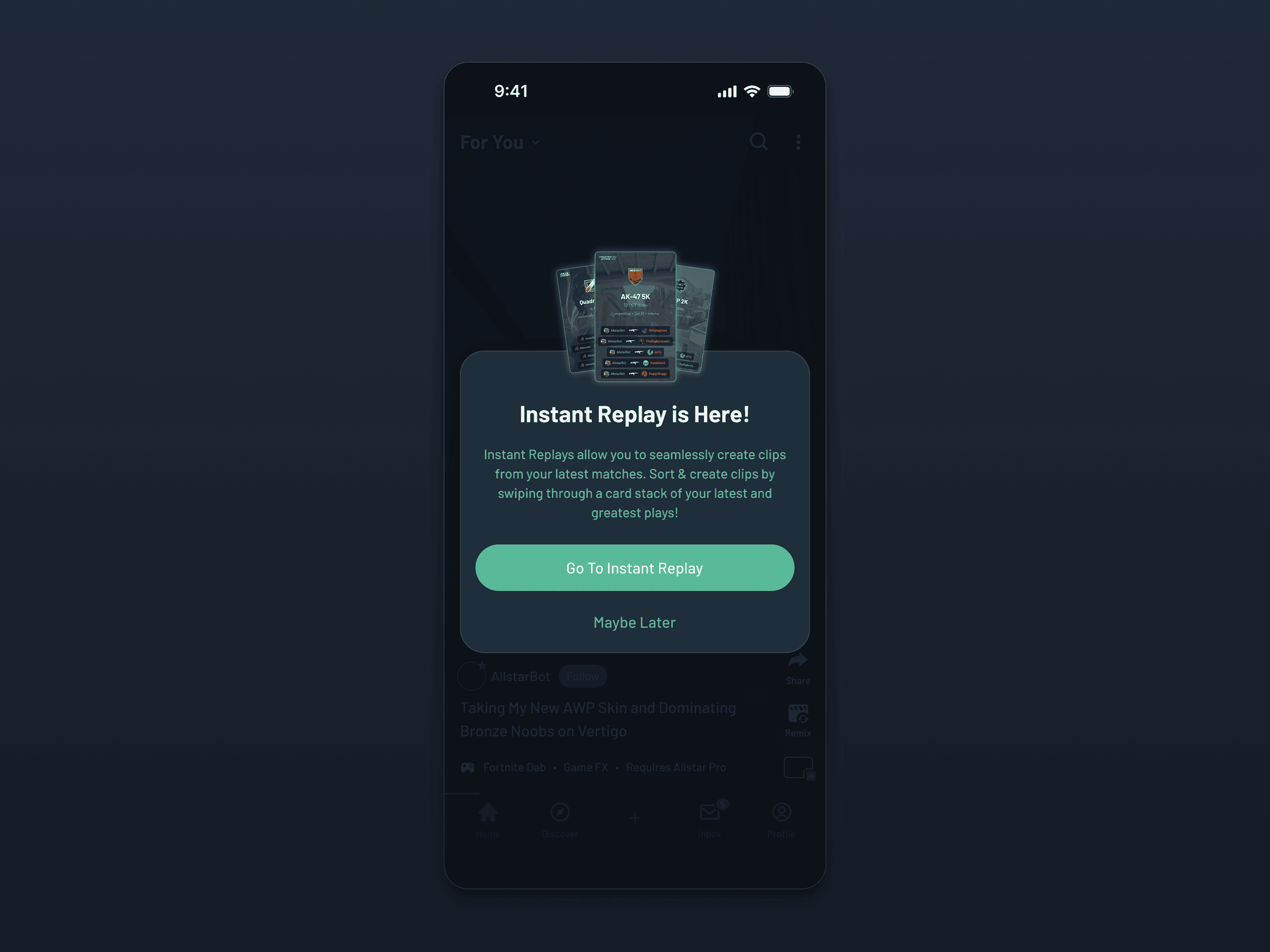
Announcement dialog
IMG
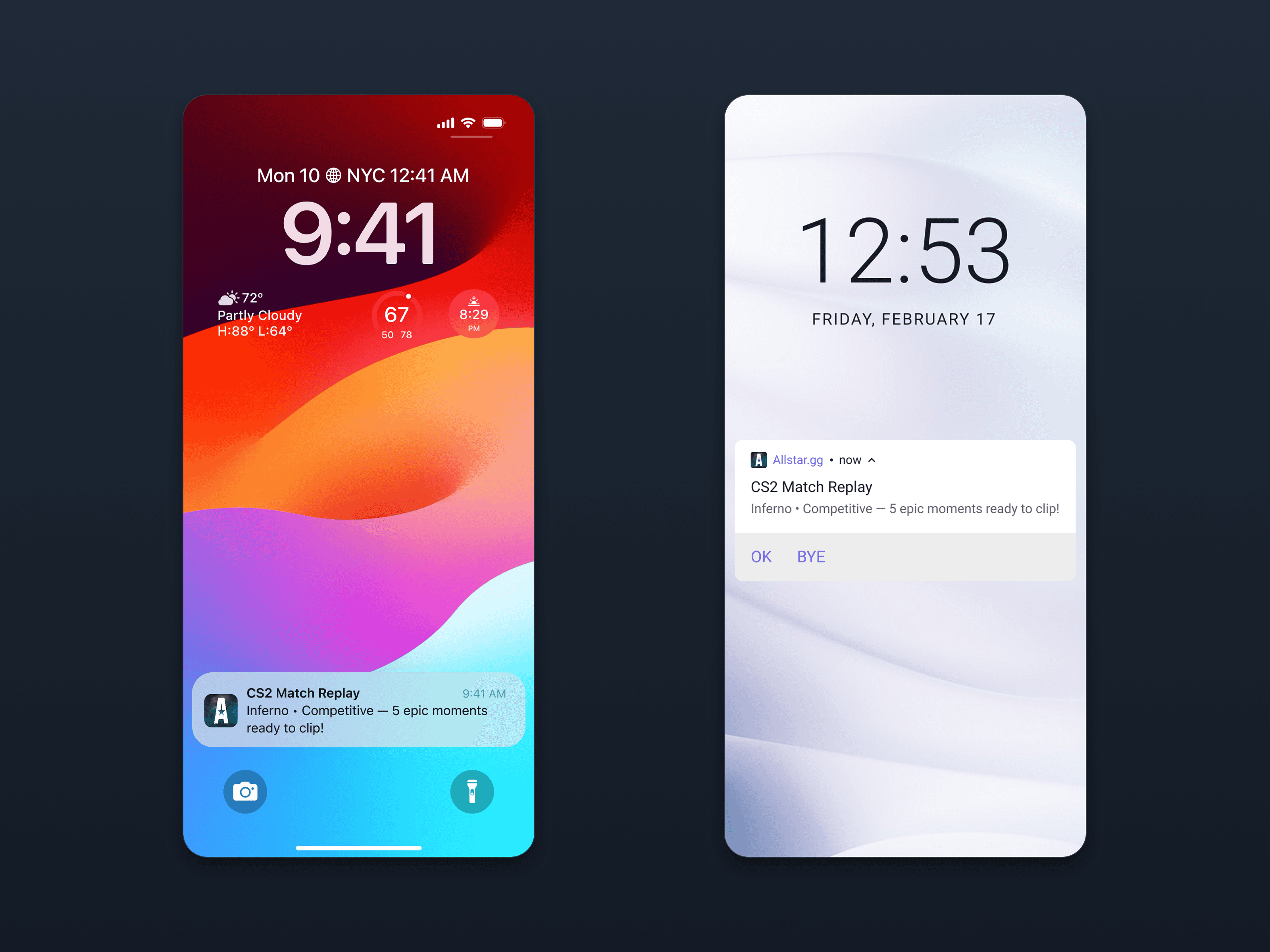
iOS & Android mobile push notifications
IMG
Instant Replay onboarding flow
IMG
Outcome
An unexpected business pivot…
Designs were handed off, but deprioritized as Allstar pivoted to social consumption features for Series B fundraising. This taught me to advocate for users while understanding business realities; I documented everything for future use.
Next Steps
Success Metrics & Future Vision
I defined key metrics to track if this feature eventually launches:
Metric #1
Moment to Clip Conversion Rate
Measures if our system is accurately spotting the moments that players actually find valuable.
Metric #2
Notification Click-Through Rate
Tracks the strength of our habit loop; tells us if users are consistently returning to claim their post-game highlights.
Metric #3
Day 1, Day 7 Retention Rate
Proves the feature isn't just a gimmick but has become a core part of the user’s gaming habit.
Metric #4
Social Shares per User
Proves the clip creation process makes it easier for players to move from playing to sharing.
Retrospective
What I Learned…
Designing for Flow, Not Just Features
The biggest unlock was removing steps from the user's path—I reduced the flow from 6 steps to 2 by shifting clip creation from user-driven to Allstar-driven. This taught me to always ask: "What if the user didn't have to do this at all?"
The Value of "Good Enough" Data
I initially thought we needed full video previews, but the moment cards (map icons, weapon loadouts, kill feeds) gave users enough context to confidently identify their plays. This taught me that smart constraints breed creative solutions—users need the right contextual anchors, not necessarily high-fidelity.
Push Systems Build Habits, Pull Systems Require Them
The original flow assumed users already had a habit of checking Allstar, which is a losing battle against forgetfulness. By delivering notifications after every match, I created a self-sustaining habit loop: trigger (match ends) → action (swipe) → reward (clip ready) → next trigger.
Balancing Business Constraints With User Advocacy
Having this project iceboxed taught me that strategic pivots are part of the startup game. By documenting everything thoroughly, insights informed other projects like the social feed redesign—being a good designer means understanding when to push, when to pivot, and how to remain valuable.
Next Project