Instant Replay
Allstar.gg
2025
ROLE
Product Designer
TEAM
Product Manager
TIMELINE
4 Weeks
PLATFORM
Android, iOS
OVERVIEW
Recording Clips Using Game Data, Not Screen Recording.
Allstar.gg is a unique tool for gamers. Most recording software slows down your computer because it records your screen like a movie. Allstar is different; it watches the game data in the cloud. This means you get high-quality videos of your best plays without your computer ever lagging or slowing down.
IMG
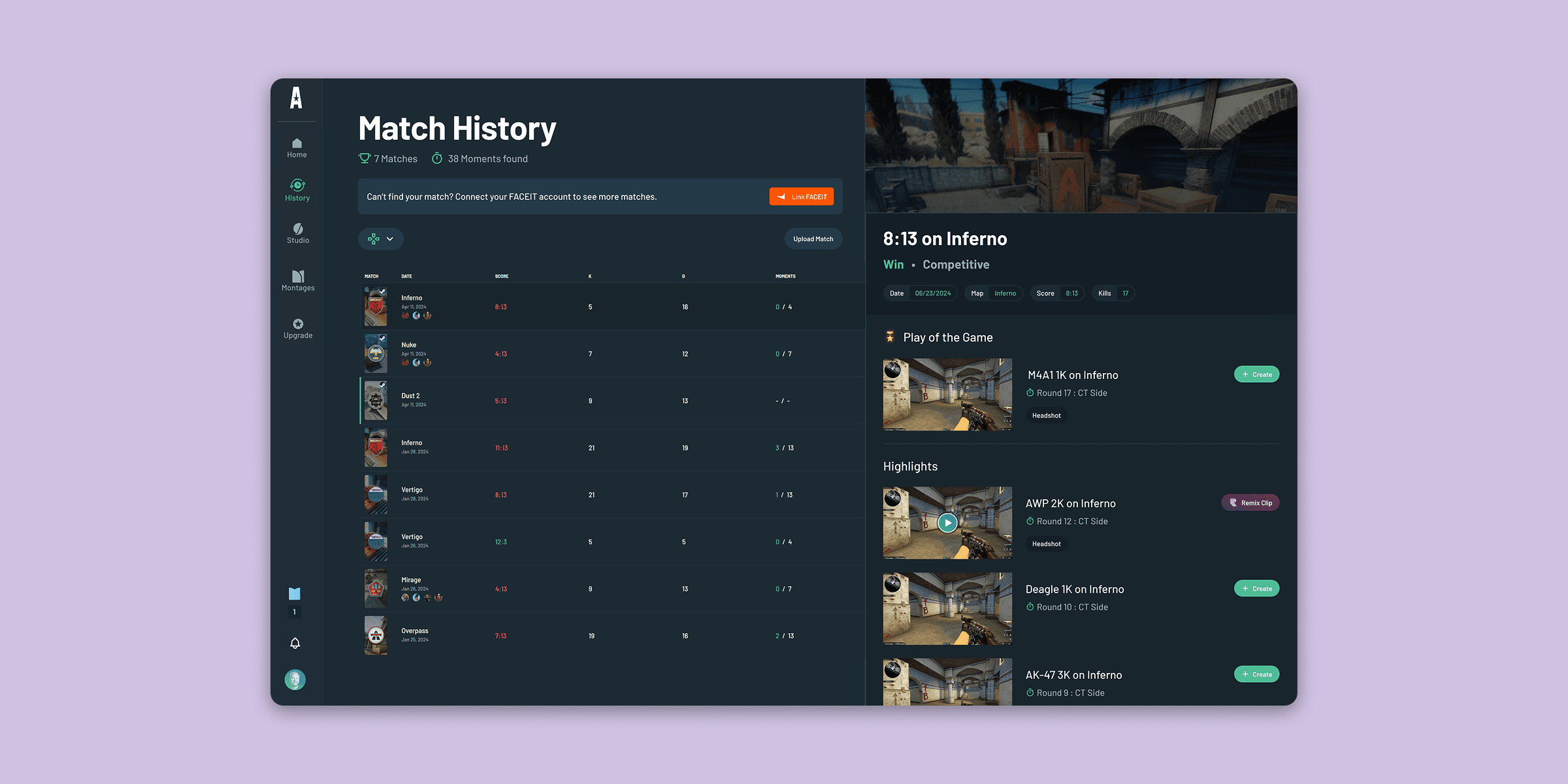
Allstar's Match History page.
The Problem: A Celebration That Felt Like a Chore
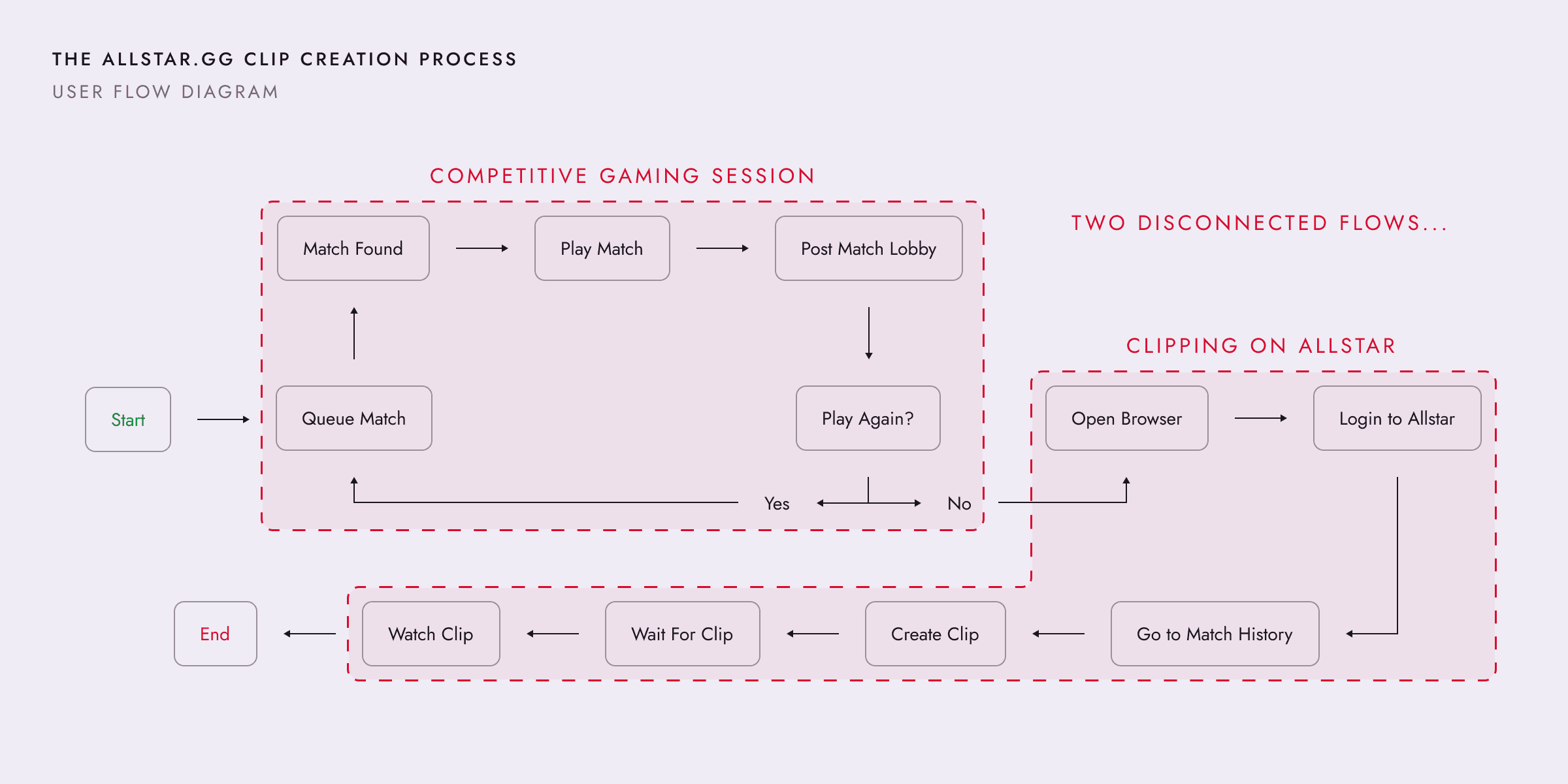
Allstar's existing clip creation flow did not fit seamlessly into typical gaming patterns. After playing for hours, a gamer had to disconnect from their session, open the Allstar app, and try to remember exactly when their best plays happened. This created a value gap; the effort it took to find a clip, request it, and wait 10 minutes for it to be ready was so high that many players simply gave up.
Instead of celebrating a great win, users were stuck staring at their match history screen and trying to remember if their "Triple Kill" happened on the first match or the fifth. By forcing the user to bridge the gap between their gameplay and the platform themselves, the product was inadvertently designing for drop-off rather than engagement.
IMG
Existing User Flow: Creating a clip on Allstar.gg
The Strategy: From User-Driven to Allstar-Driven.
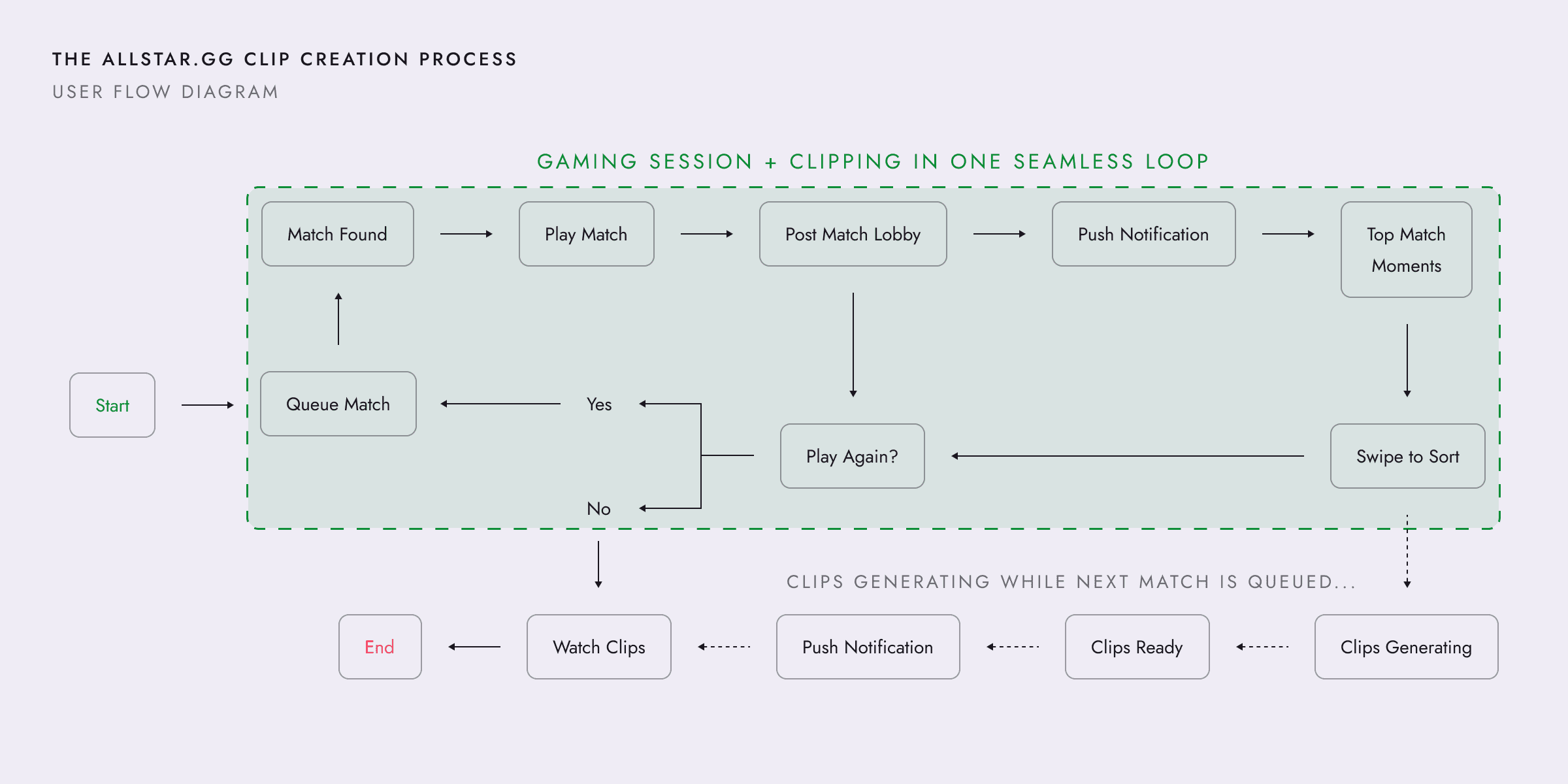
My strategy was to evolve the experience from something the user had to initiate into something the system delivered automatically.
Instead of waiting for a gamer to seek out their clips, I designed a way for Allstar to stay one step ahead. By leveraging real-time match data, the platform could spot a high-impact play the moment it happened. This shifted the burden of discovery from the user to the platform. The goal was to transform Allstar from a manual tool into a personal digital editor that delivers value proactively.
IMG
New gaming flow
DISCOVERY
Diving Deeper Into the Problem Space
I conducted a week of user interviews and analyzed Mixpanel data to move beyond assumptions, uncovering three primary friction points:
Post-Match Fog
70% of interviewed players play 3+ matches per session. By the time they open Allstar, they cannot distinguish which "Triple Kill" happened on which map or in which game.

Rendering Time Churn
Analytics showed a 45% drop-off rate during the 3–10 minute render window. Users are unwilling to watch a loader for long stretches of time while waiting for their clip to load.
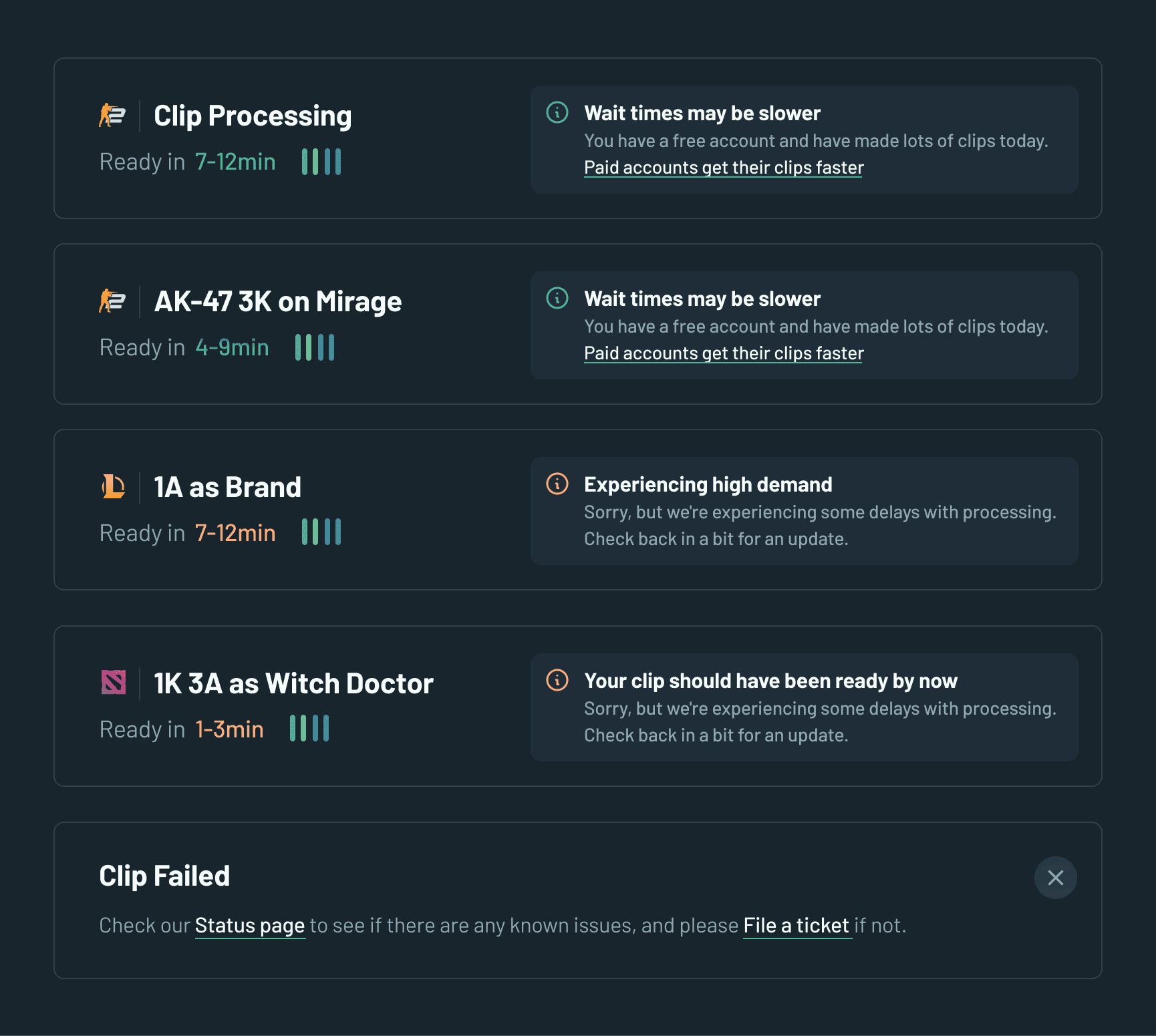
The Black Box Issue
Because technical limitations prevent a video preview before the cloud render is complete, users feel they are operating in a black box. They are forced to gamble their time and daily clip credits on a moment they haven't seen yet, leading to high hesitation and low conversion.
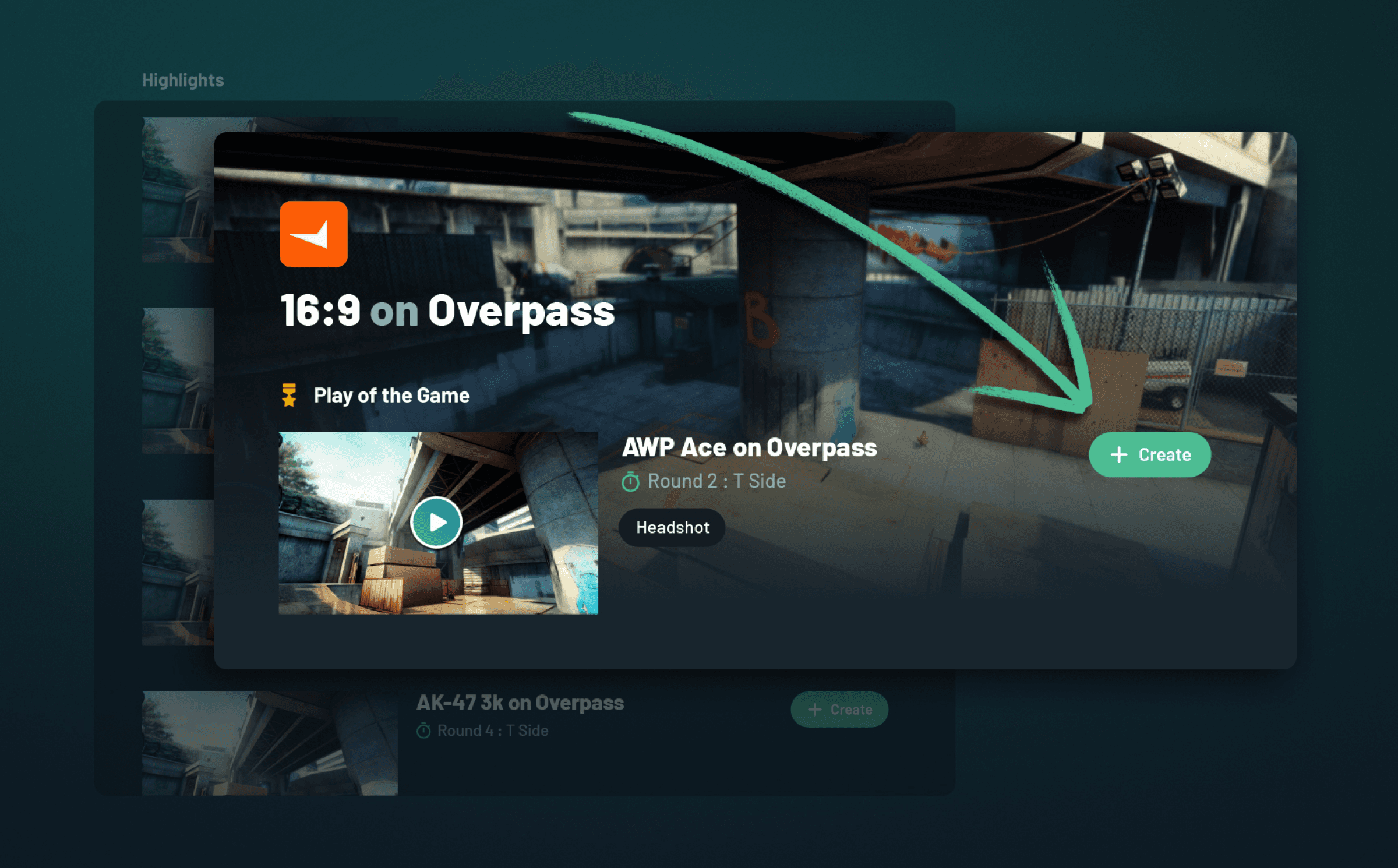
SOLUTION
Serving Gameplay Clips on a Silver Platter
I proposed a system that flips the script: Allstar does the work while the user is still playing.
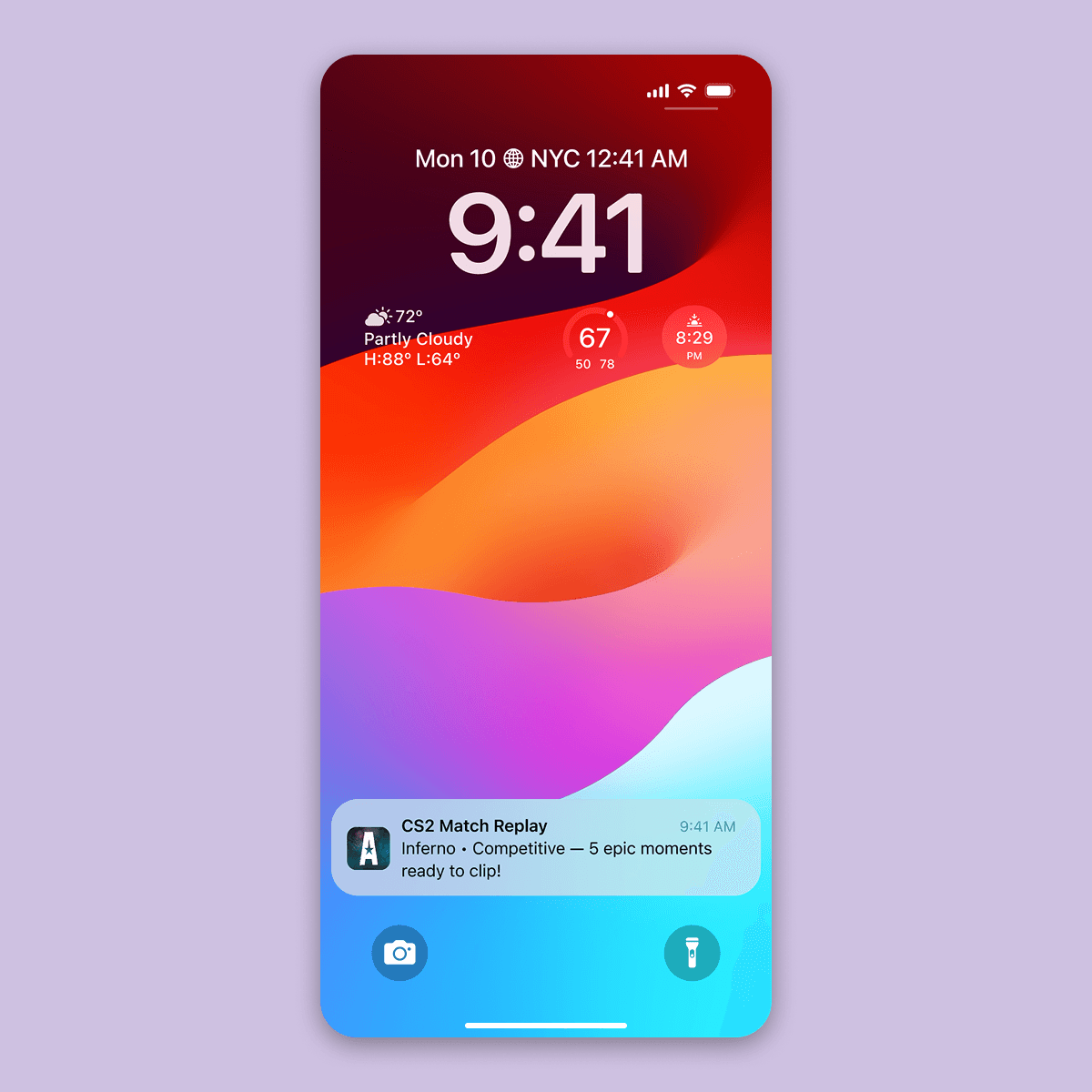
Post-Match Push Notifications
Immediately following a match, Allstar’s engine identifies the most impactful moments (such as a game-winning play) and delivers them directly to the user via a personalized push notification.
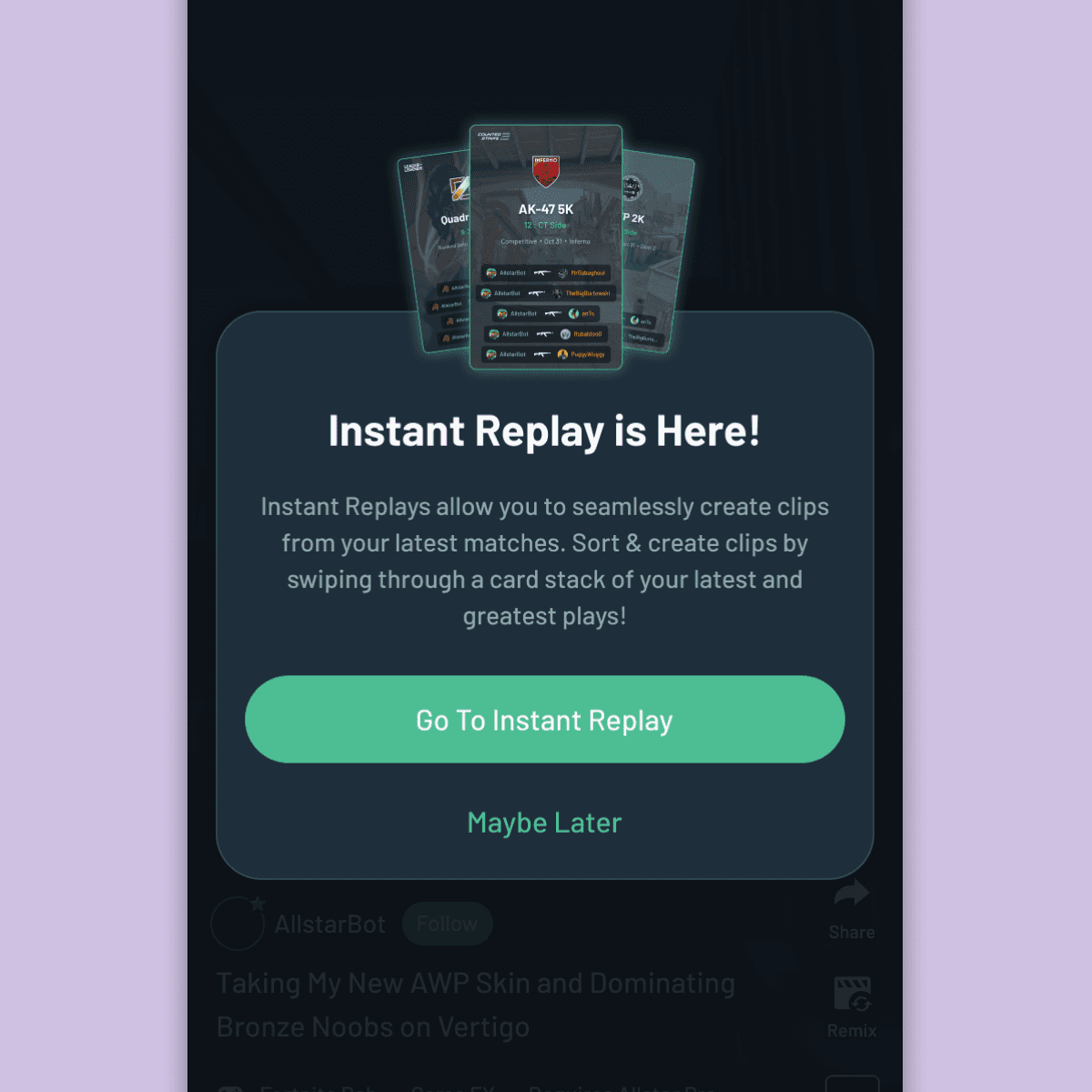
Building Excitement
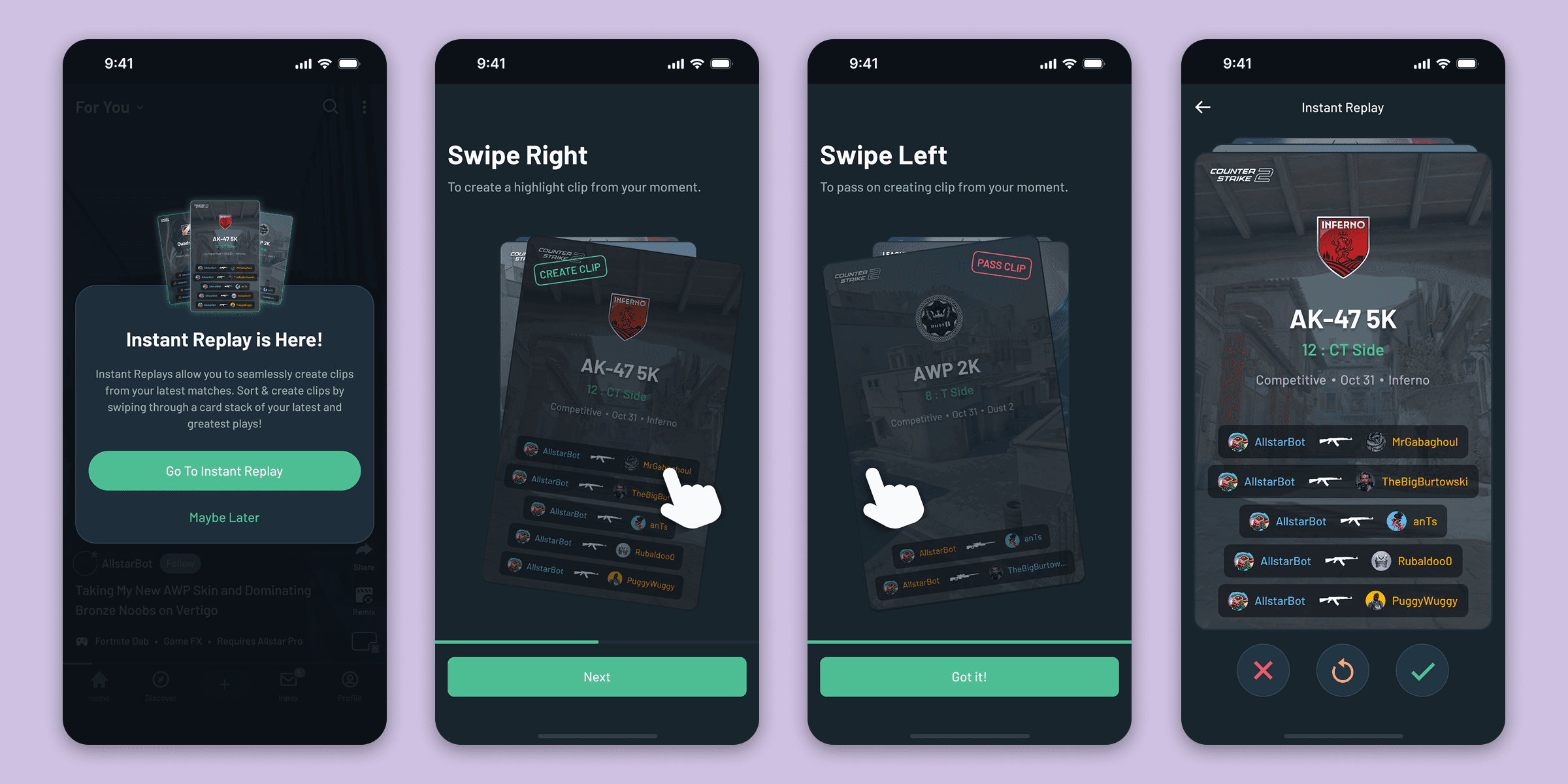
I designed a promotional pop-up dialog to inform users of the new feature upon first login when they have moments available to clip.
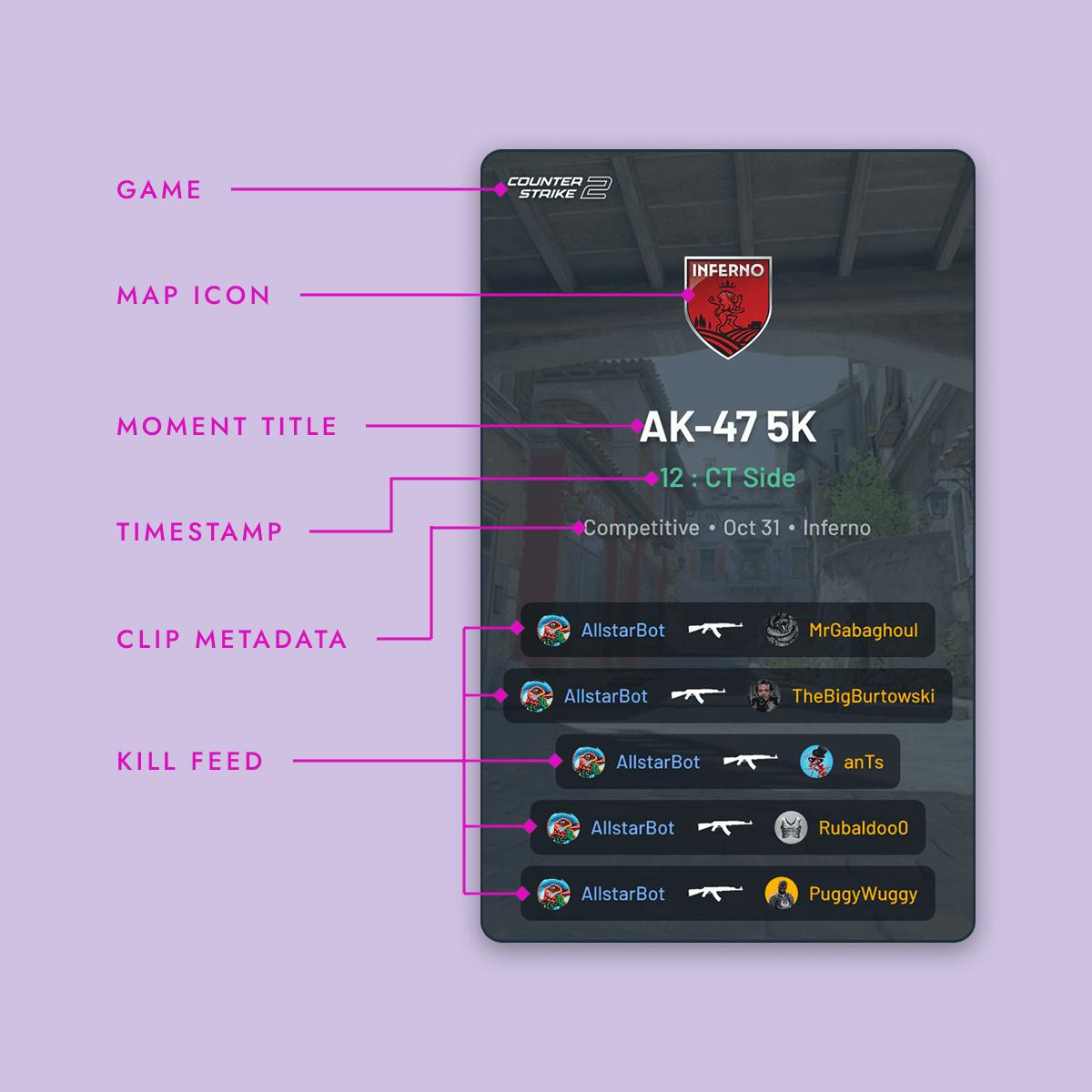
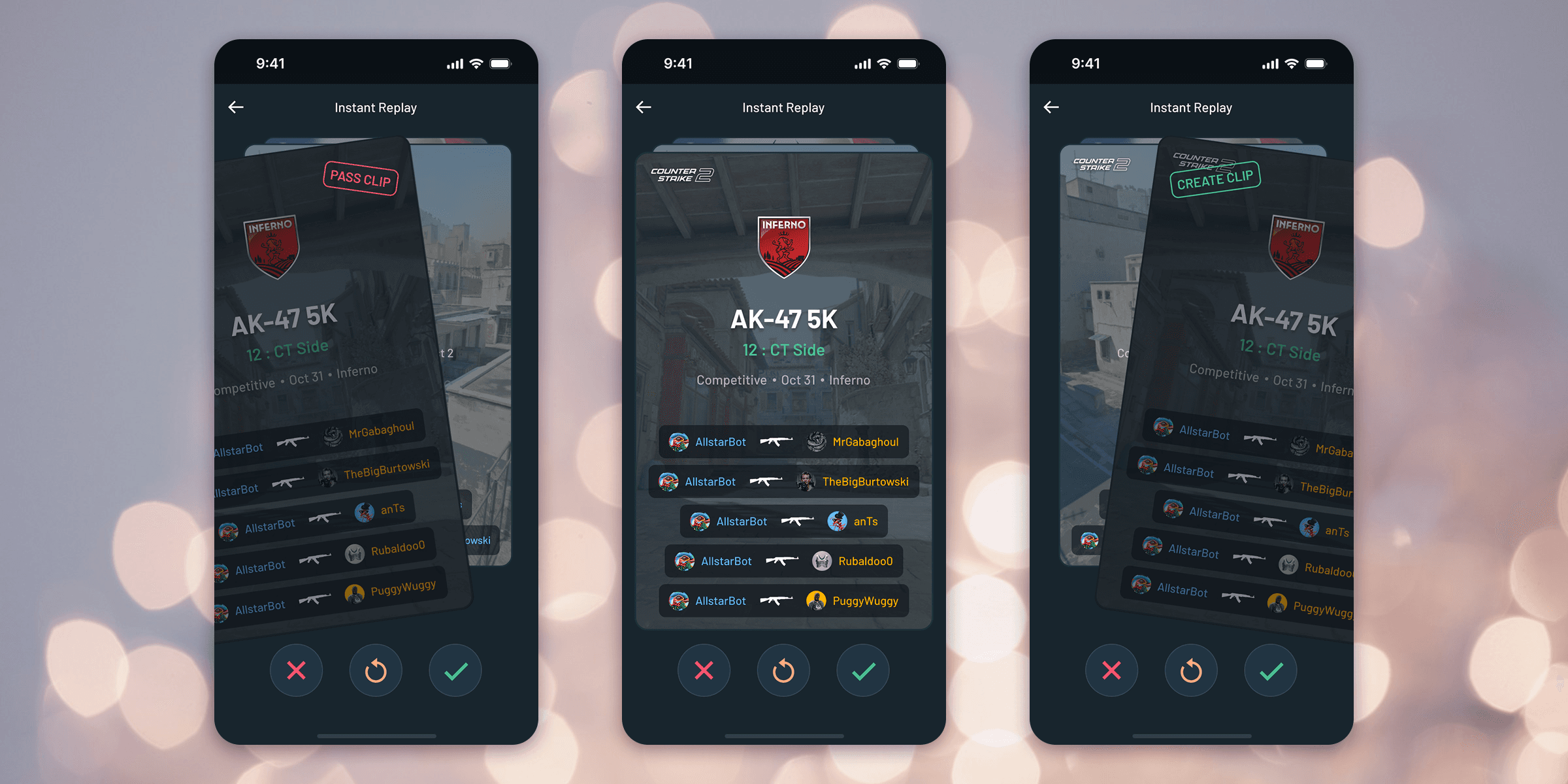
Gameplay Moment Cards
By visualizing key match data like maps and weapon icons, the card allows players to identify their in-game moments at a glance. It bridges the information gap, giving users the confidence to approve a clip without needing to wait for a video to load.
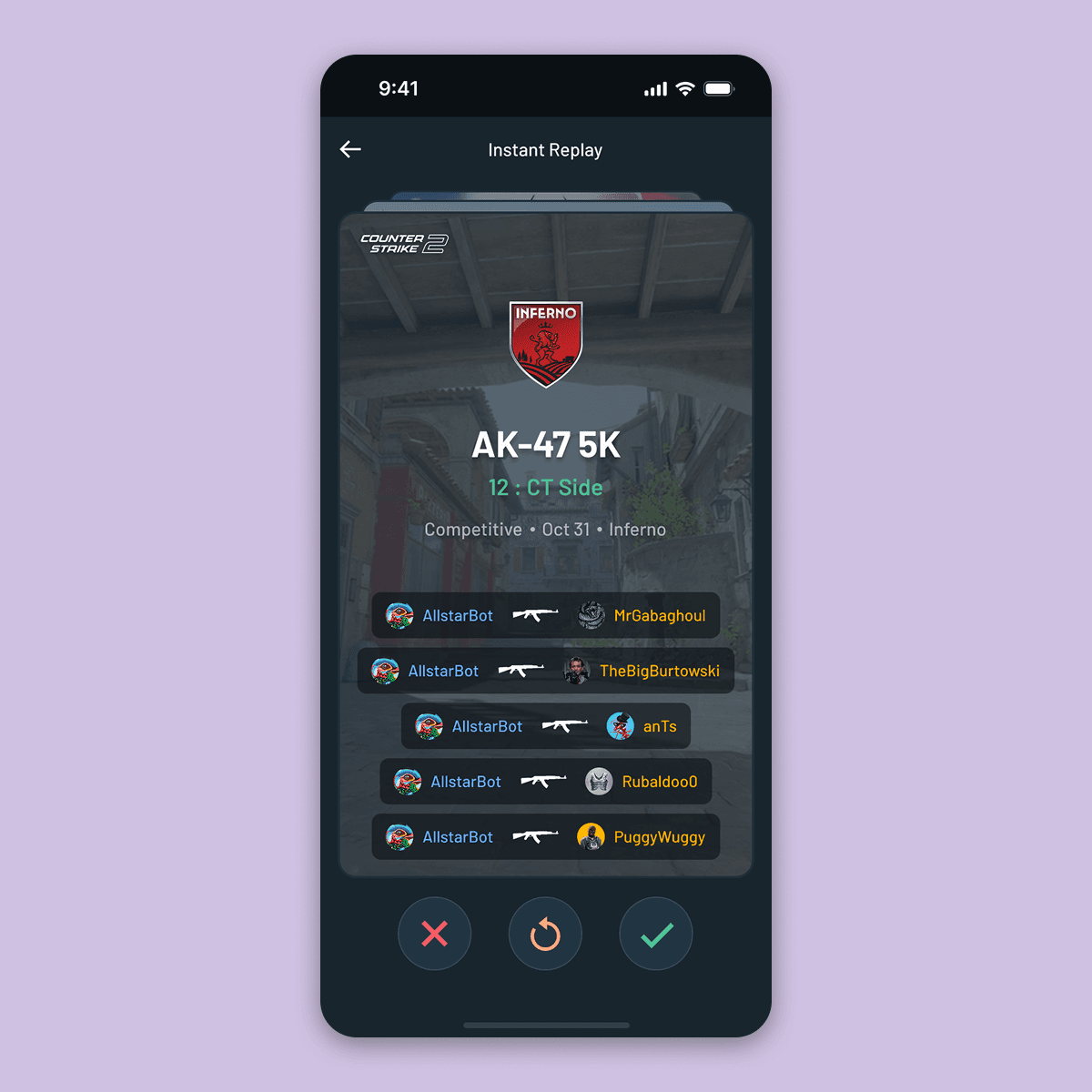
Moment Review Queue
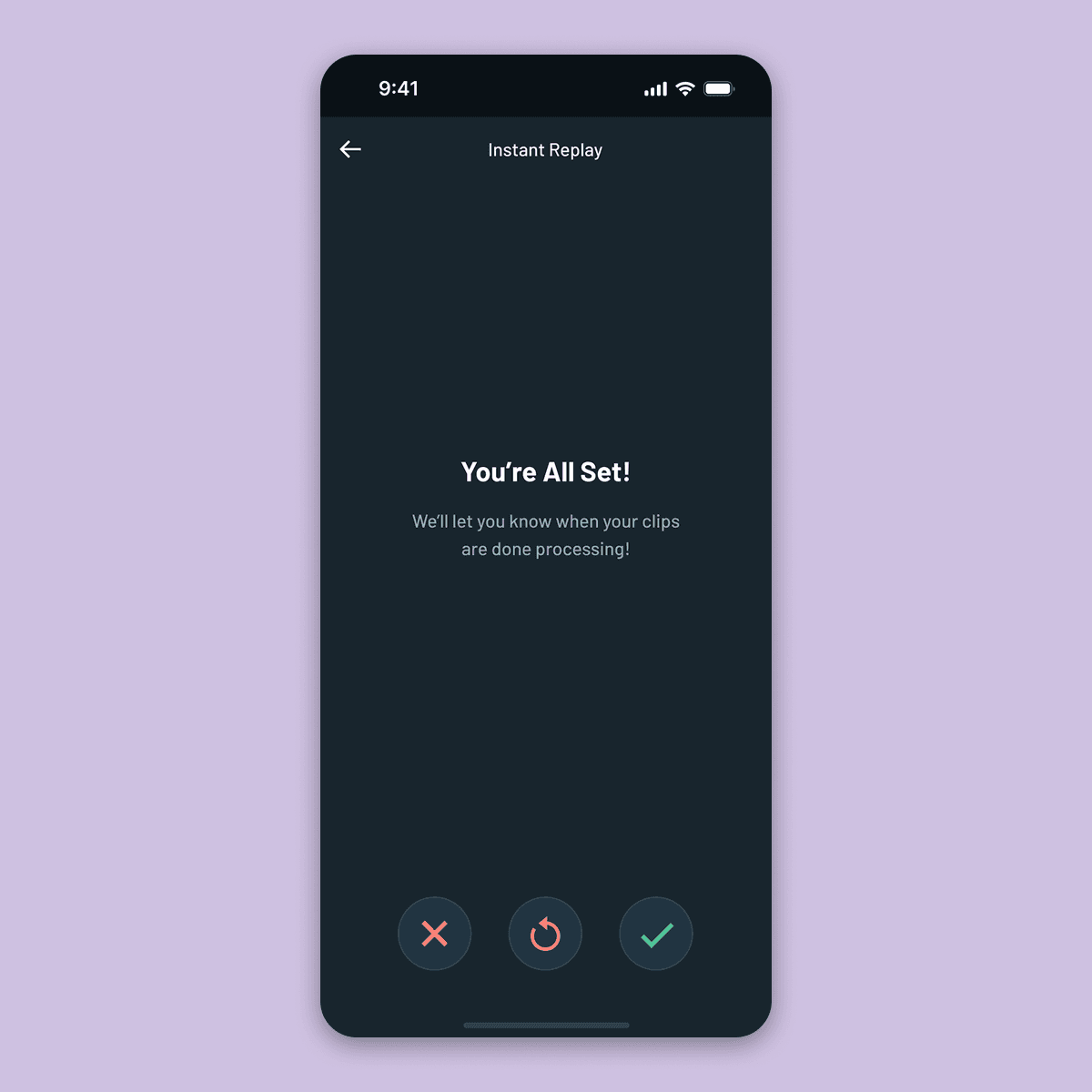
Asynchronous Delivery
Instead of forcing the user to wait for a 3-10 minute render, the app confirms the request and encourages the player to return to their match. This turns a technical bottleneck into a set-and-forget experience, with a final notification delivered only when the content is ready for social sharing.
The original manual process was a pull system—it required the user to exert effort to get a result. This created a barrier to habit formation. My redesign transformed this into a push system. By automating the discovery of highlights, we moved from a high-effort chore to a low-effort reward cycle.
Every time a match ends, the user receives a 'digital trophy' in the form of a Recap notification. This consistent, positive reinforcement turns Allstar from a tool they use into a service they anticipate, significantly increasing the likelihood of long-term engagement.
IMG
First time user experience flow
Tracking Success Metrics
Although shifting business priorities moved this project to the icebox, I defined some key performance metrics to ensure we can accurately track success and user engagement during its eventual rollout.
Moment to Clip Conversion Rate
Measures if our system is accurately spotting the moments that players actually find valuable.
Notification Click-Through Rate (CTR)
Tracks the strength of our habit loop; tells us if users are consistently returning to claim their post-game highlights.
Day 1, Day 7 Retention Rate
Proves the feature isn't just a gimmick but has become a core part of the user’s gaming habit.
Social Shares per User
Proves the clip creation process makes it easier for players to move from playing to sharing.
PIVOT
Aligning Design with Business Reality
Every great product exists within the reality of a company's broader roadmap. While the Instant Replay designs were finalized and met with high enthusiasm from the user-testing group, the project was intentionally "iceboxed" during the handoff phase.
The Reason: Shifting from Consumption to Creation
As the company moved toward a critical Series B funding round, our investors and leadership identified a new North Star: transforming Allstar from a content creation tool into a social consumption platform. The strategic goal was to move beyond just helping players make clips and start building a destination where they watch and interact with them.
To support this, the roadmap was pivoted toward social-first features, such as comments, likes, and feed-based interactions, to increase time spent on site and community engagement.
REFLECTION
What I Learned…
This project was a deep dive into balancing technical limitations with user psychology. It pushed me to analyze every step of the user journey to ensure the product worked for the user, not the other way around.
Designing for Flow, Not Just Features
By shifting clip creation from being user-driven to Allstar-driven, we allowed the user to naturally integrate our app into their existing gameplay habits. I learned that reducing the interaction cost, even by just a few clicks, can be the difference between a product that feels like a chore and one that feels like magic.
The Value of "Good Enough" Data
Designing the Gameplay Moment Cards taught me that users don't always need a perfect, high-resolution preview to make a decision. By providing "good enough" context (map, weapons, and kill-feed), we solved a massive technical bottleneck and saved significant server costs without compromising the user experience.